

Universities
The Oxford Road Corridor is home to two of the UK’s biggest universities, The University of Manchester and Manchester Metropolitan University as well as The Royal Northern College of Music, a leading conservatoire.
It was at The University of Manchester that the atom was split by Sir Ernest Rutherford, the world’s first programmable computer was born, Alan Turing pioneered artificial intelligence and cyber security, and graphene, the world’s first 2D material, was isolated. In 2019 they were ranked the world’s 8th and the UK’s 4th most innovative university by Reuters, as well as climbing to 29th position in the overall world rankings. The university attracted over £300m in research grants and contracts in 2018 and 83% of their research activity was judged to be ‘world leading’ or ‘internationally excellent’.
Manchester Metropolitan University’s iconic School of Art is the second oldest design school in Britain, established to provide design training to the manufacturing industry and to this day is still influenced by the specialist needs of industry. Art and Design research was ranked 6th in the UK for overall research power. It is also the UK’s greenest university and is home to the ground breaking Manchester Fuel Cell Innovation Centre.
The RNCM is rated the UK’s leading music college for research and 100% of impact arising from their research for Music, Drama, Dance and Performing Arts was ‘world-leading’. In 2017 it was ranked ‘Gold’ in the Higher Education Funding Council for England’s first Teach Excellence Framework.


All Saints Library
All Saints Library is part of Manchester Metropolitan University, aiming to provide students with a full range of services and resources to complete their studies and research successfully.

Brunswick Park
Enjoy views of some of the best architecture in Manchester in this green space which was opened in 2018 by The University of Manchester.

Christabel Pankhurst Institute
The Christabel Pankhurst Institute is a £25 million initiative at the University of Manchester, bringing together researchers, clinicians, businesses and public sector partners to accelerate health technology research and innovation. Based in a flagship building on Dover Street, it draws on the University’s strengths in digital technology, artificial intelligence and advanced materials to address challenges in health and care. Working with the NHS, industry and local government, the Institute supports the development and translation of new technologies into practical applications, helping improve patient outcomes while creating opportunities for collaboration, commercialisation and growth across Greater Manchester’s health innovation ecosystem.

Confucius Institute University of Manchester
The Oxford Road Corridor is the proud home of Manchester’s Confucius Institute, the second of its kind to be established in the UK.

Grosvenor East Theatre
Grosvenor East Theatre is a high specification space at Manchester Metropolitan University and home to Manchester School of Theatre.

Henry Royce Institute
The Henry Royce Institute is the UK’s national institute for advanced materials research and innovation, with its central hub based at The University of Manchester. Bringing together nine leading research partners, it provides access to specialist laboratories, cutting-edge equipment and expertise for academic researchers and industry. Its work focuses on developing new materials and technologies to address major challenges, including clean energy, decarbonisation, healthcare and sustainable manufacturing. By connecting world-leading research with commercial partners, Royce helps accelerate the journey from scientific discovery to industrial application, supporting innovation and economic growth across the UK.
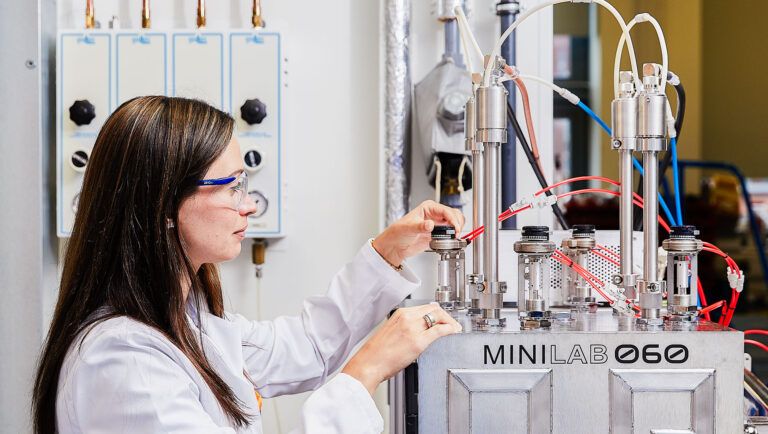
Manchester Fuel Cell Innovation Centre
The Manchester Fuel Cell Innovation Centre at Manchester Metropolitan University is an important contributor to the Oxford Road Corridor’s advanced materials and clean energy research. The Centre brings together academic expertise and industry partners to develop next-generation fuel cells, electrolysers and hydrogen technologies. Its research spans advanced materials, including nanomaterials for fuel cells, energy storage and the development of more durable and efficient energy devices. By addressing the scientific and engineering challenges involved in improving performance and reducing costs, the Centre helps translate materials research into practical technologies. Its work supports the development of cleaner energy systems and the transition towards a low-carbon economy.

Manchester Metropolitan Institute of Sport
Manchester Metropolitan Institute of Sport is a new, world-class facility designed to champion everything that sport can do.

Manchester Metropolitan University Special Collections
An extensive archival collection spanning art, design, history, technology and culture – open to MMU staff, students, and members of the public alike.

Manchester Museum
Manchester Museum, part of The University of Manchester, is the UK’s largest university museum with a collection of about 4.5 million items from every continent.

Manchester Poetry Library
Explore over 10,000 books and recordings at the North West’s first public poetry library, a brand-new addition to Manchester’s literary scene.

Martin Harris Centre for Music & Drama
A venue hosting concerts, theatre, and literature events at the heart of The University of Manchester.

Modal Gallery
Modal Gallery at SODA is the place to experience cutting-edge, immersive digital artwork from local and international artists.
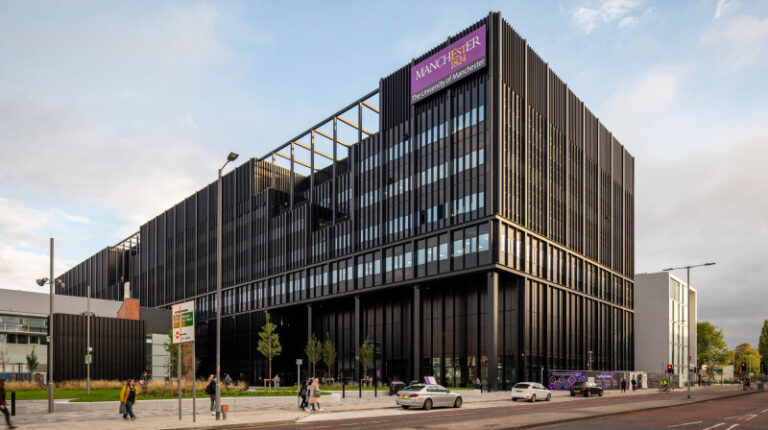
Nancy Rothwell Building
Engineering Buildings A and B are open for teaching and learning. MECD is the home of engineering and materials at The University of Manchester

Number 70 Oxford Street
Number 70 Oxford Street is the former site of the Cornerhouse and now a part of the Manchester Metropolitan University campus.
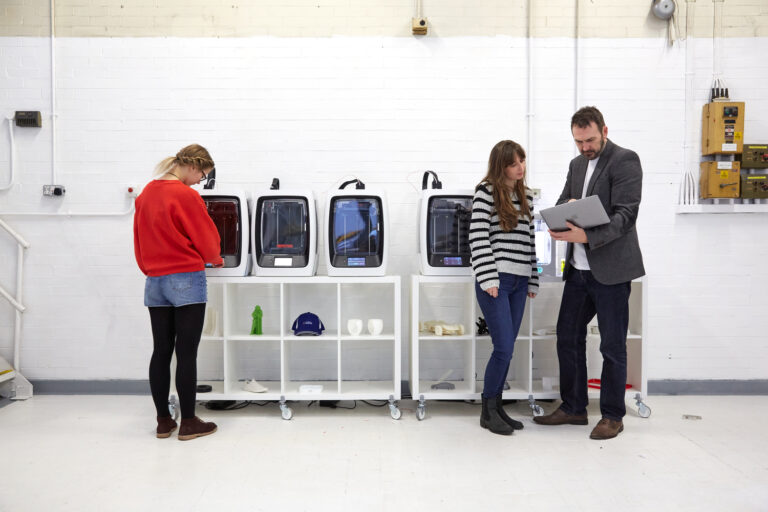
PrintCity
PrintCity is Manchester Metropolitan University’s centre for additive and digital manufacturing, supporting the development and application of advanced manufacturing technologies. Established in 2018, the facility brings together engineers, designers, researchers and students, working with businesses of all sizes to turn ideas into practical products. Its specialist equipment includes a wide range of 3D printers, 3D scanning technologies and facilities for working with materials including polymers and metals. Alongside commercial projects and research collaborations, PrintCity supports skills development through Manchester Met’s MSc in Digital Design and Manufacturing, helping businesses adopt new technologies and develop expertise in advanced manufacturing.

Renold Building
The iconic Renold Building has been reimagined as a vibrant innovation hub for start-ups, tech pioneers and community in the heart of Manchester.

Samuel Alexander Building
The Samuel Alexander Building at the University of Manchester houses the School of Arts, Languages and Cultures and Creative Manchester.

School of Digital Arts (SODA)
The School of Digital Arts (SODA) is a purpose-built, interdisciplinary school at Manchester Metropolitan University that offers an interdisciplinary approach to creative courses.

The Holden Gallery
Manchester School of Art’s Holden Gallery curates an exhibitions programme that focuses exclusively on recent developments in international contemporary visual art.
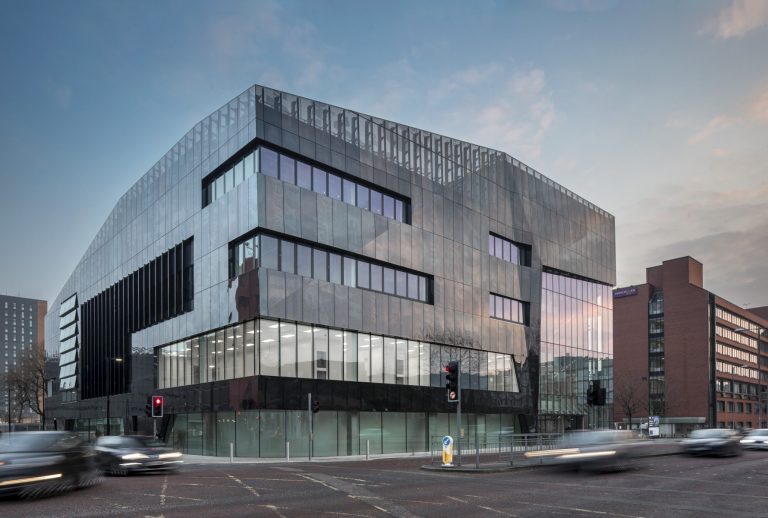
The National Graphene Institute
The National Graphene Institute (NGI) at the University of Manchester is a world-leading research centre dedicated to graphene and advanced two-dimensional materials. Opened in 2015, the £61 million facility brings together researchers and industry partners to explore applications across sectors including healthcare, energy, electronics and advanced manufacturing. Its specialist infrastructure includes advanced laboratories and more than 1,500 square metres of cleanroom space for fabricating and testing materials and prototype devices. Building on Manchester’s role in the discovery of graphene in 2004, the Institute supports collaboration between academia and industry, helping translate fundamental research into new technologies and commercial applications.

The Whitworth
A visually stunning art gallery located at the heart of Whitworth Park, with a collection containing around 55,000 items.

University Green
University Green is a modern home for retailers and food and drink outlets as well as a tree-lined green space for the public to enjoy.

University Place
Known for its distinct drum shape on Oxford Road, University Place is part of the University of Manchester and has the largest dedicated lecture theatre in the Greater Manchester.

