Energy House 2.0: Mishka Henner and Emily Speed
4th May 2025 – 20th July 2025
Find Out More →- Accessible Toilet
- Wheelchair Accessible

This Spring Castlefield Gallery will launch an ambitious exhibition of new work by artists Mishka Henner and Emily Speed, in partnership with the University of Salford Art Collection and Energy House Labs. The exhibition will be the culmination of 18-month Artist Residencies with Energy House 2.0 at the University of Salford, a period in which the artists have immersed themselves in this world-leading energy performance facility, its cutting-edge research, and the facilities and research of the wider university.
A unique facility, Energy House delivers pioneering research on how carbon neutral and net zero homes, the homes of the future, will be built. Energy House 2.0’s chamber can accommodate two full-sized detached houses and simulate climatic conditions including wind, rain, snow, solar radiation and extreme temperatures. Research at Energy House cuts across science and technology, architecture, design and our rapidly changing climate; the artists’ residencies have taken Henner and Speed on different yet intersecting journeys. 
At Castlefield Gallery, Henner will present a sound and video installation, which responds to data from the Blitzortung network of over 10,000 lightning sensors positioned across six continents. Each time a lightning strike occurs somewhere in the world it will be recorded on a graphic musical score developed by Henner, which in turn triggers the sounds of percussion instruments. The work will create unique sonic events in the gallery which connect listeners’ bodies to live data recorded on a planetary scale.
This piece by Henner is comparable to the day-to-day activity at Energy House 2.0 where scientists and researchers collect data from countless sensors and devices located in and around the houses built inside the facility’s chambers. That data provides information about the houses, the materials they are made from and how they react to various atmospheric conditions.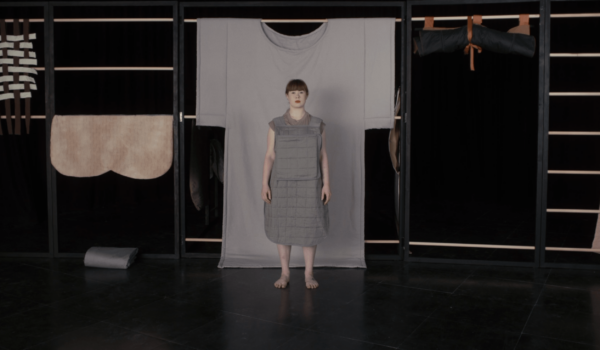
Speed considers the houses in Energy House 2.0 as 1:1 models, and in addition to testing materials and energy use, has engaged with the facility’s spaces as sites ripe for challenging ideas and exploring new possibilities. Speed’s work seeks to question how the minimal space requirements and heteronormative family-based design of many new-build houses affect the way we interact and cohabit.
Kitchens are of particular interest to Speed, an often-overlooked site of daily ritual, existing at the cross-section of gendered household roles and hyper-capitalist consumerism. Idealised kitchens feature in countless social media posts, coffee table books, and glossy fashion and lifestyle magazines that encourage the types of consumption that may undermine work done by ventures such as Energy House 2.0 to build and maintain homes more sustainably.